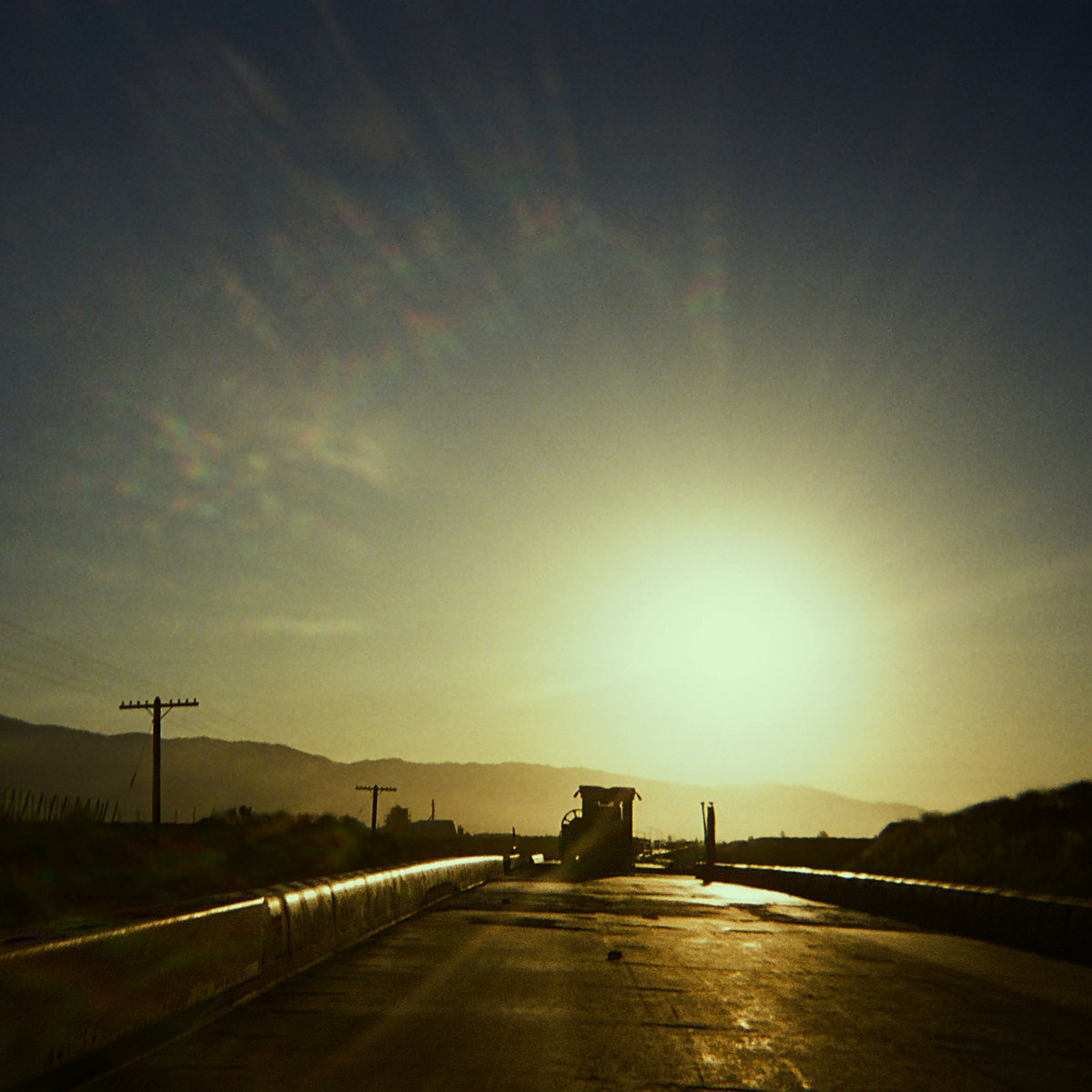
Uphill
by Braden Diotte
The fact that it was heading to Barstow should’ve been the deal-breaker. Nothing good comes out of Barstow, so anything heading there would likely be fixing to die or stay there forever. But when it pulled through the railway corridor that bisects downtown San Diego – its war timpanis pounding and its loaded moans climbing the faces of high-rise condominiums that boast “urban living” like a sugar-coated disclaimer – I aimed to board it.
Struggling to preserve my night vision in the twilight, I hunkered deep into a neglected corner with my back to the forthcoming train’s three radiant eyes, bearing slowly down, the residual heat of the day evaporating the urine from the soil beneath my feet, the stench of ammonia stifling my breath. One glance into those Medusan fires and I’d lose my rods for enough minutes to lose my train, or lose my legs trying for it. The burden fell upon my ears, tracking the linear rise in amplitude that metered its progress, tracking its pitch for adjustments in speed, the pressure and intensity building to such extreme levels that something would have to give, then building even more until something finally did. The light traded for heat, the horns replaced with hiss, and in the shadow of the passing engines I became invisible.
The crew manned the lead engine, and the second engine was too close for comfort, so I chose cover in the cab of the third engine unit – already flat on its floor and staring skyward through its windows by the time that the soft orange light of the downtown passenger rail station shone through them, casting confounding bands of harsh shadow that scanned all surfaces in all directions like some dystopian digital surveyor. Inside the cab, the churning engine noise was subdued into a guttural pulse that beat far slower than my own, but its rhythm remained steady and the forward-horns kept blasting. The last shot of adrenaline had left my bloodstream and I wore a thin sheen of sweat on my skin when I took post in the brakeman’s chair to watch the city fall behind me.
The unit was a guaranteed ride, though for all of its warmth, comfort and security it was as underwhelming as they come. At first opportunity, when stopped at a signal in wait for a southbound passenger train to clear the tracks ahead, I walked the length of the train in search of a better ride. When I found it, I spread myself across the deck of the cleanest grainer in the lot of them, and slept the warmest of summer nights through obstacles that once had me playing mouse to an imaginary cat.
I woke in Corona with the rise of the sun and the first traces of its heat, stopped for who knows how long beneath a fishbowl slew of concrete overpasses clogged with commuters that were, if only in that moment, my most polar antithesis. I stepped from the train to brush the grit from my teeth and vacate my bladder onto the stark blend of dirt, rocks, glass and industrial minutiae that only mimicked nature from a distance, but bore the distinct mark of the collective human in its absence of life. I gazed up at the commuters – seemingly desperate and drugged in their struggle for significance – then attempting to view myself from their perspectives, wondering how easily I could be written off as the bum – listless, impotent, another waste of flesh wasting away in a wasteland; answering my own question when I realized how quickly I’d committed the same disservice to them.
The return to passable nature came with the slow climb into the Cajon Pass just north of San Berdoo, where blankets of coastal shrubbery are pocked by monumental boulder outcroppings, and ancient seafloors churn skyward in fragmented diagonals, as if collapsed under their own mass and sinking from their centers.
Cresting the summit, I climbed into the tight v-shaped cubbyhole of my grainer, and watched through a sliver as tall fences with razor-wire appeared on either side of the tracks. Cameras on towering poles prompted me to take deeper cover, hiding blind beneath the uniform black of my jacket, from where I could hear the idling engines of trucks come and go as we passed them. It was the construction of this isolated maximum-security zone that had kept me off this particular stretch of rails for nearly fifteen years until this day, when my confidence matched my recklessness, I resigned myself to the circumstances, and was spared.
We built speed, the fences subsided, and I emerged from the cubbyhole wearing a satisfied grin and the gray dust of the grainer’s mysterious contents, riding the deck through the last of the small towns where my freedom was less prone to be jeopardized. And when the lead engine dipped its nose into the west end of its northernmost terminus, only eighteen hours after I’d boarded it two-hundred miles prior, my boots crunched down into the scorching volcanic ballast of Barstow under the full brunt of the mid-summer sun.
Triple-digit heat radiated from the blinding white sand of the wash that bounds the northern edge of the five-mile-long classification yard at Barstow. I took shelter in a pine grove on the crest of a ridge from which I could clandestinely spy the rolling stock of Los Angeles, Chicago and Salt Lake City interchangeably, thought indeterminately. The ends of the yard were too distant on either horizon to witness which train went where, with the exception that anything rolling on the spur-line that connected Barstow to the Bakersfield mainline via the barren Mojave Desert could be seen in profile several miles yonder as it cut north from the westernmost mouth of the yard. It was the only track that concerned me, and any train but a train leaving on that spur-line in late afternoon or evening would spell catastrophic disaster for a rider with as little water as I was carrying.
The worst of the day’s hours were spent face-down, drooling vital saliva into a bed of dry pine needles, waking periodically to replenish my lost fluids with a dwindling reserve of water; to peel the painful crust of soot and snot and blood from the inside of my nose; to swat the unrelenting flies from my bare feet; or to acknowledge the unfavorable speed and/or unpredictable destination of a train departing on the closest tracks, fifteen feet from where I lay. When anything pulled through the yard westbound, I’d perch on the ridge and watch for it to appear on the spur-line far in the distance. Most times it wouldn’t. But for the few times that it did, there were no common behaviors; any train on any track in that yard could leave in any direction at any time. I swilled the last of my water and watched in frustration as the one that got away got away, its silhouette slow and black against the monochrome orange of a post-sunset sky.
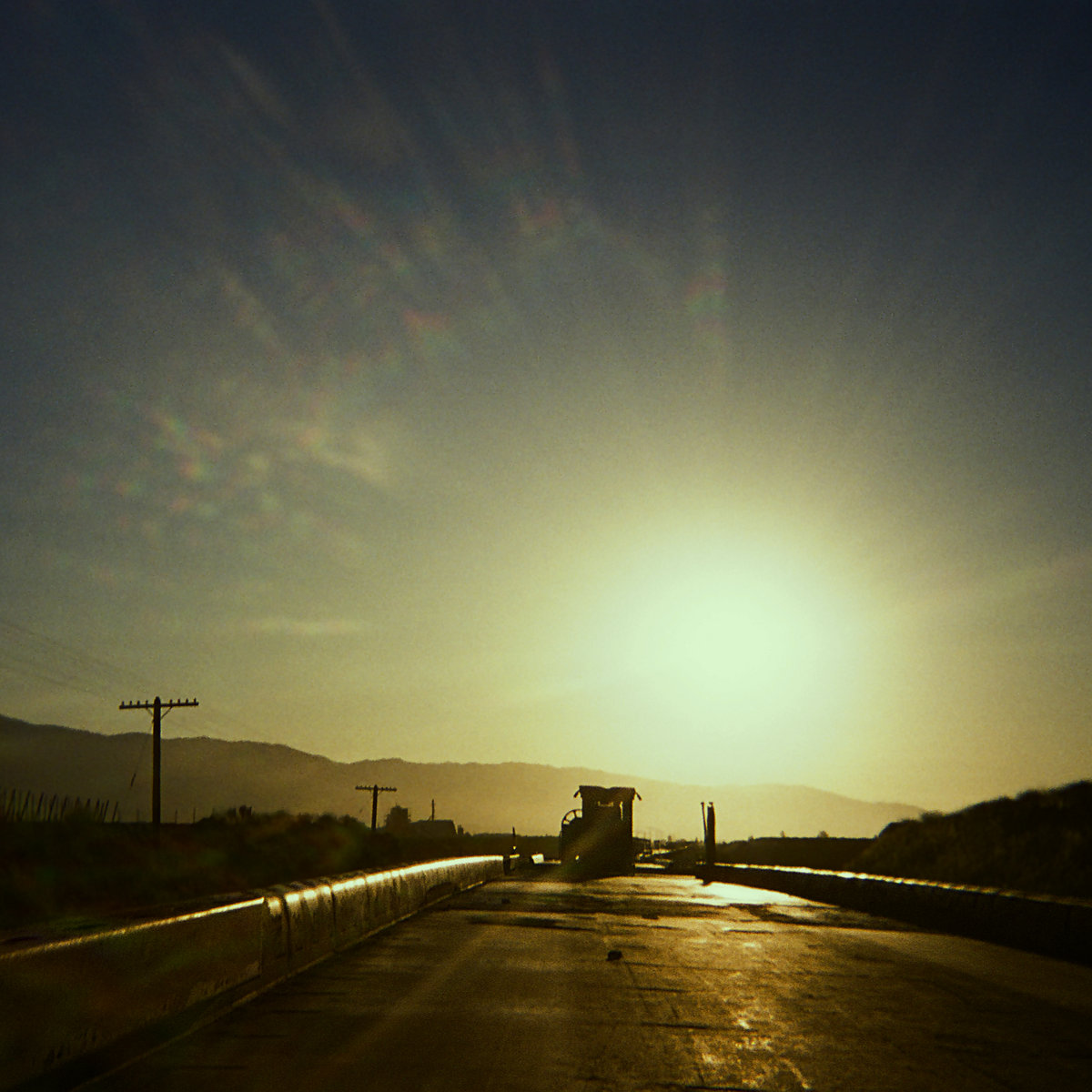
The night brought reprieve from the heat. A gentle breeze tickled the pines, and the desert fauna rustled from its burrows. The yard had fallen silent with the sun, so I abandoned the coddling security of the pine ridge to put myself on that distant spur-line, where every train goes my way. But there I just slept for hours, as nothing came by to rouse me. When the pre-dawn chill set in, I rose to investigate the gargantuan box train that sat dormant on the northbound curve; lights on, but lifeless. It offered no rides, consisting solely of two solid miles of loaded rock boxes, topped off and tarped, with barely a ladder to hold on to. Any three of the four engines would’ve sufficed had I not been wildly suspicious of their destination. Loads like this end up in places best described as hell-on-Earth, and I could name a few of them within a 50-mile radius: the borax mines at Boron, the cement mill at Black Mountain, or any of the many quarries of the Mojave Desert. Opting out, I pilfered the fourth unit for all of the water bottles I could carry, and hid from eyes and the rising sun in the alcove beneath the overpass spanning the westernmost mouth of the yard, laying in wait to grab hold of the next thing that passed north through it. And for the next 12 hours, I waited.
I squandered those hours hucking small chunks of concrete at other small chunks of concrete, breaking the monotony only with other similarly monotonous behaviors, and periodically slow-dancing with an incoming freight in an attempt to stay out of sight. I observed closely the color of my urine fluctuating between clear and a deep yellow, and watched as each small bottle of water in my stash ran dry in a similar rhythm. I found thirty years of graffiti, written in some of the most obtuse angles by people who found themselves contorted into the same obtuse places from which I read it. One needn’t be a sociologist to infer from the three-decade story arc that the world has undoubtedly become a more volatile place.
I said it best when I said it first; nothing good can come out of Barstow. I watched it be attempted repeatedly, and I attempted right alongside of it. We’d get about a long-arm’s length out of the yard before it grabbed us by the caboose to drag us back in, sometimes pulling me a mile or more into its depth. I’d not come here to die, nor to stay forever. But when the day had passed, and the Sun’s brutal command lost reign to the penetrating full moon that glared down sharply on my situation, I was no longer ‘good’. I was angry, exhausted, and so desperate to leave Barstow that I bet it all on the ladder of a train moving faster than I could run, and won.
©2012 – Braden Diotte